
The simple locate: $200–$400
Short accessible runs: confirmed, pinpointed, marked without ceremony.
The water bill knows something you don’t. Somewhere under a slab or behind a wall in Double Bay, a pipe is quietly feeding the ground, and finding it with instruments instead of a jackhammer is the difference between lifting three tiles and gutting a bathroom. We locate to centimetres, then repair through one deliberate hole.
A hidden leak cannot help giving itself away three times over. Escaping water under pressure sings at frequencies acoustic gear can chase along a pipe run; it changes the temperature of whatever it soaks, which thermal imaging paints in false colour through wall sheeting and slab surfaces; and it bleeds pressure from whichever isolated section of pipework it lives on, which a gauge catches cold. One signal suggests; three signals triangulate.
That triangulation is what you are actually buying. Where the readings converge, we mark the floor, and in Double Bay’s renovated homes, where pipework wanders in ways no council plan ever recorded, that mark routinely sits metres from where anyone would have started digging on instinct. The difference between those two points is the difference between lifting three tiles and re-doing a bathroom.
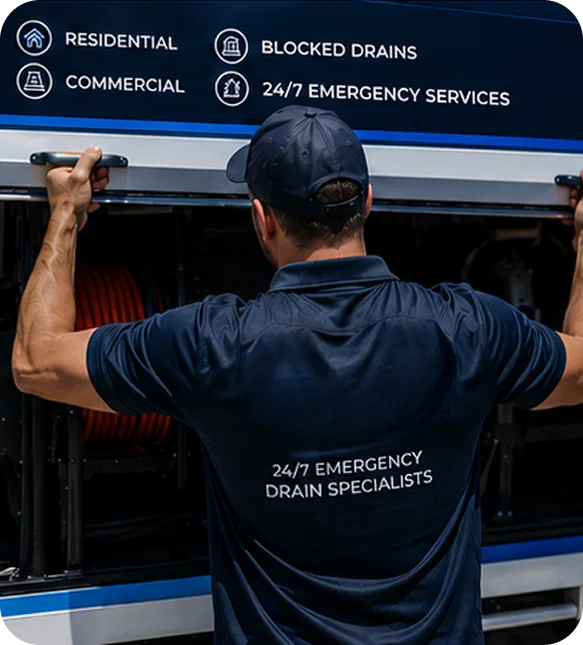

Corrosion works faster in humid, salt-carrying air, and the parts that fail earliest are the small ones: tap bodies, external fittings, and the connections around a hot water unit.
Double Bay’s many cafés and restaurants send fats and oils into the sewer, where they set hard. We clear grease-choked lines and keep them flowing.
Many of the leaks we find on properties near the water are not in the pipework at all but at a fitting that has been quietly corroding in plain sight. They are also the cheapest to put right, if found before they let go.
Many blocks of flats and mixed-use buildings share drainage, so one blockage affects several units. A camera pinpoints the problem.
The technical question and the financial question have different answers, and both need settling. Pipework serving only your lot is yours; risers, mains and common-property lines belong to the owners corporation.
A leak detection report that names the line, the lot and the direction of travel is what turns a dispute into a decision. That is what we write, because a description of where the water appeared settles nothing.
Mains pressure rises as elevation falls, and properties low on a slope routinely sit at the top of the acceptable range. Sustained high pressure is a genuine cause of leaks rather than merely a contributor.
Streets sloping down to the bay move stormwater fast, and blocked pits back up in heavy rain. We clear them quickly to stop flooding.
If your property is low-lying relative to the surrounding streets and you have had more than one fitting fail, a pressure test costs very little and a limiting valve costs little more. It is the cheapest leak prevention available.
A cracked earthenware line leaking into its own trench washes out the bedding supporting it. Losing support, the pipe sags; sagging, it holds water; holding water, it collects solids and eventually blocks.
Older homes and buildings still run on original clay and earthenware drains prone to cracks and sags. CCTV shows us exactly what’s going on.
Which is why a drain that has begun to block regularly and a drain that is leaking are frequently the same drain at different stages. Finding it early is considerably cheaper than finding it once it has collapsed.
The apartment showing the damage is almost never the apartment with the fault. Water tracks along the top of a slab, through penetrations and down whichever path is available, which can be several metres laterally before it enters your ceiling.
Thermal imaging and moisture mapping from below will usually establish the direction it is arriving from, which narrows the source before anyone needs access to a neighbour's bathroom.
Short accessible runs: confirmed, pinpointed, marked without ceremony.
First hour with the full kit, pressure isolation, thermal, acoustic, on a typical concealed leak.
Extended runs, awkward access and multi-leak eliminations, beyond hour one.
Deep slab lines and multi-storey tracing at the top of the Sydney range.
Quoted off exactly what detection found, repaired through the marked spot, same crew, same visit, one call-out.
Compare it with exploratory demolition, which costs more than detection before it has even guessed right once. Figures here are indicative of the 2026 Sydney market rather than a quote from us, you get your own number as a fixed price before any work starts.

The meter test done properly, plus your bills. If the evidence says there is no supply leak to find, you hear exactly that, free of a detection invoice.
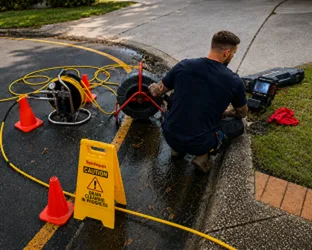
Isolating pipework section by section against a pressure gauge, hot versus cold, line by line, convicts one run and acquits the rest.

Acoustic tracking and thermal imaging walk the guilty run until the signals stack. The X on the floor is accurate to centimetres.
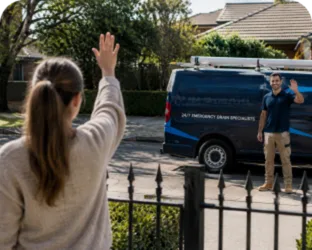
Access opens exactly at the mark; the failed section is repaired and pressure-tested. If the run's condition argues for a reroute instead, both numbers land first.
Then the leak is real and already on the clock. Book the detection before it surfaces somewhere expensive.
Instruments, a mark on the floor, one hole, one fix: and the meter finally standing still.

Leave your details and our local Double Bay team will call you back fast.